
Tenant-Assisted Inspections: How to Set Them Up
Learn how to implement tenant-assisted inspections for Australian rental properties. Covers benefits, legal considerations per state, technology that enables them, structuring the process, best practices, and when to avoid them.
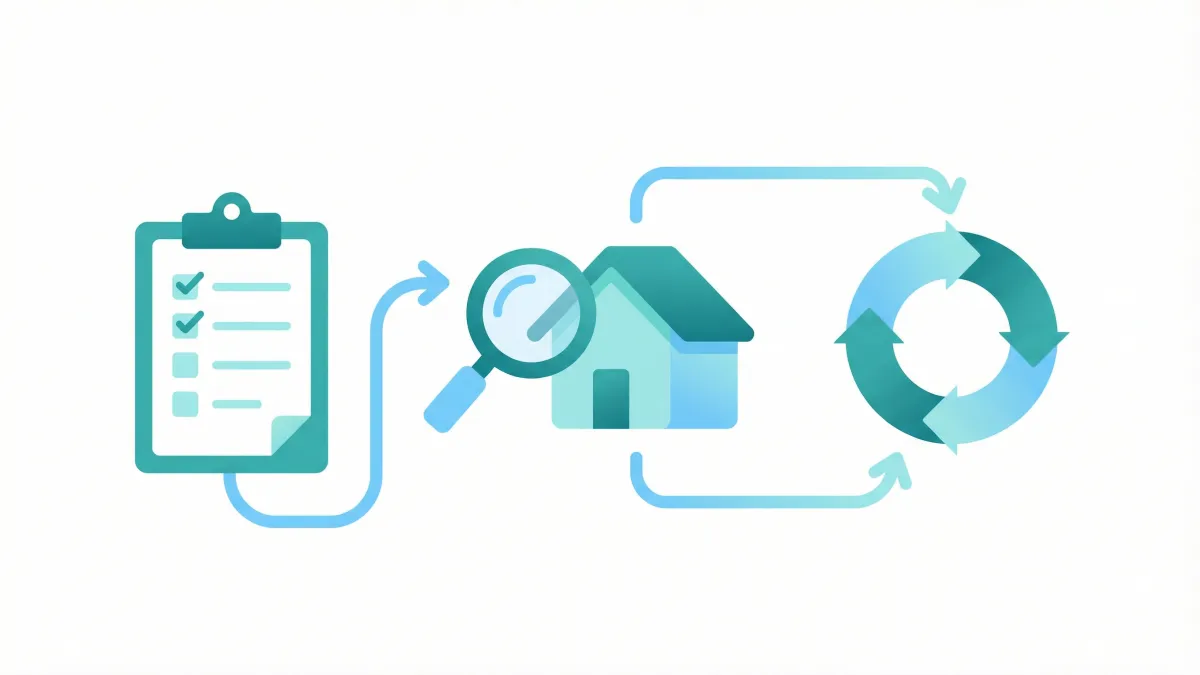
Quick Answer
Tenant-assisted inspections let tenants contribute documentation of the entry condition via a guided checklist, saving property managers time while increasing tenant engagement and buy-in. They work best for entry inspections at low-to-mid-risk properties. They are not suitable for exit inspections, high-value properties, or tenancies with a history of disputes.
Introduction
The traditional model of property inspections in Australia has not changed much in decades. A property manager drives to the property, walks through every room, photographs everything, writes descriptions, and produces a report. This model works. But it is also time-consuming, expensive, and increasingly difficult to scale as portfolios grow and staffing pressures mount.
Tenant-assisted inspections represent an emerging alternative that is gaining traction across the Australian property management industry. The concept is straightforward: instead of the property manager conducting every aspect of the inspection alone, the tenant participates in the process by capturing photos, noting conditions, and providing their own observations using a structured digital tool.
This is not about replacing professional inspections entirely. It is about recognising that tenants are already living in the property, seeing its condition every day, and are capable of documenting it when given the right tools and guidance. When implemented well, tenant-assisted inspections save property managers significant time, increase tenant engagement, and can actually produce more detailed documentation than rushed property manager inspections.
However, this approach is not suitable for every situation, and the legal landscape in Australia varies by state. This guide covers everything you need to know about tenant-assisted inspections: what they are, the benefits they offer, how to structure them, the technology that makes them work, the legal considerations in each state, best practices for implementation, and the scenarios where you should stick with traditional inspections.
What Are Tenant-Assisted Inspections?
A tenant-assisted inspection is a property inspection process where the tenant plays an active role in documenting the condition of the property. The exact format varies, but the general approach involves the tenant using a digital tool (typically an app or web-based form) to photograph and describe the condition of each room in the property, following a structured checklist provided by the property manager or agency.
It is important to distinguish tenant-assisted inspections from fully self-service tenant inspections. In a tenant-assisted model, the property manager retains oversight and control. They provide the checklist, define what needs to be documented, review the tenant's submissions, and may still visit the property for certain inspections. The tenant is assisting the process, not replacing the property manager.
This distinction matters because it addresses the most common objection to tenant involvement: that tenants cannot be trusted to document damage honestly. In a well-structured tenant-assisted model, the property manager reviews every submission, can request additional photos or clarification, and maintains final authority over the report. The tenant does the legwork of photographing and describing, but the professional assessment remains with the property manager.
Tenant-assisted inspections are most commonly used for three types of inspections. First, entry condition reports, where the tenant documents the property condition when they move in. Since the tenant has a strong incentive to note every pre-existing issue (to protect their bond), this is a natural fit. Second, routine inspections, where the tenant provides photos and notes ahead of the property manager's visit, allowing the PM to focus on areas that need attention rather than documenting everything from scratch. Third, interim check-ins between formal inspections, where the tenant provides a quick update on the property's condition.
The model is less commonly used for exit inspections, where the property manager's independent assessment is typically more appropriate due to the potential for conflict of interest.
Benefits of Tenant-Assisted Inspections
The benefits of this approach extend to property managers, tenants, and landlords. Understanding these benefits is important for getting buy-in from all parties.
For property managers, the most immediate benefit is time savings. A typical entry condition report takes 30 to 45 minutes on site plus travel time. If the tenant can complete the initial documentation remotely, the property manager's involvement is reduced to reviewing and approving the report, which might take 10 to 15 minutes. Across a portfolio of 100 properties with tenants moving in and out regularly, this translates to dozens of hours saved per month.
Beyond time, tenant-assisted inspections reduce scheduling complexity. Coordinating property access with tenants, tradespeople, and landlords is one of the biggest logistical challenges in property management. When tenants can complete their portion of the inspection at a time that suits them (within a defined window), it eliminates the back-and-forth of scheduling a mutual time for the property manager to attend.
For tenants, the primary benefit is engagement and empowerment. When tenants participate in documenting the property condition at entry, they feel greater ownership over the accuracy of the report. They are more likely to note pre-existing issues because they understand the purpose of the report and have an active role in creating it. This reduces disputes at exit because both parties have agreed on the starting condition.
Tenant-assisted inspections also offer flexibility. Tenants can complete their documentation outside business hours, on weekends, or at whatever time suits their schedule. For tenants who work full-time or have family commitments, not having to be present during a 9-to-5 property manager visit is a genuine convenience.
For landlords, the benefits are indirect but significant. Better-documented condition reports mean stronger evidence for bond claims when needed. Reduced property manager time means lower costs (or more time spent on higher-value activities like securing quality tenants and maintaining the property). And improved tenant relationships lead to longer tenancies and lower vacancy rates, which directly affect the landlord's return on investment.
There is also a data quality argument. Tenants living in the property may notice things that a property manager conducting a 15-minute walkthrough might miss. A slow leak under the bathroom vanity. A window that sticks when it rains. A draft around the back door. These details often emerge when tenants have the time and incentive to look carefully, and they can identify maintenance issues early before they become expensive problems.
How to Structure a Tenant-Assisted Inspection
The success of tenant-assisted inspections depends entirely on structure. Without clear guidance, tenants will produce inconsistent, incomplete, or unusable documentation. With the right structure, they can produce detailed, professional-quality reports.
Start with a clear, room-by-room checklist. The tenant should not have to guess what to photograph or describe. Provide a digital checklist that lists every room in the property and every item within each room that needs to be documented. For a three-bedroom house, this might include 150 to 200 individual items. Each item should have a prompt: "Take a photo of the kitchen benchtop and describe its condition, noting any scratches, chips, stains, or damage."
Provide visual examples. Show tenants what a good condition photo looks like versus a poor one. A wide-angle shot from the doorway showing the whole room, followed by close-ups of any damage or notable items. Show them what level of detail is expected in descriptions. "Good condition" is not enough. "Laminate benchtop in good condition, minor surface scratches near sink, no chips or burns" is the standard.
Set clear timeframes. The tenant should have a defined window to complete their portion of the inspection. For entry condition reports, this is often the first two to three days after they take possession. Make it clear that the sooner they complete it, the more accurate it will be, and the better protected their bond will be. State legislation may prescribe these timeframes, so ensure your process aligns with legal requirements.
Build in a review step. When the tenant submits their documentation, the property manager reviews every photo and description. This is not a rubber-stamp exercise. The PM should check that all rooms and items are covered, that photos are clear and adequately detailed, and that descriptions are accurate and specific. If anything is missing or unclear, the PM should request additional documentation from the tenant.
Provide a mechanism for the property manager to add their own observations. Even in a tenant-assisted model, the PM should have the ability to add notes, supplement photos, or override descriptions where they disagree with the tenant's assessment. The final report should reflect the property manager's professional judgement, informed by the tenant's documentation.
Consider a hybrid approach for the first implementation. Some agencies introduce tenant-assisted inspections gradually. The tenant completes the entry report, and the property manager conducts an in-person verification visit within the first week. The verification visit is quicker than a full inspection because the PM is checking the tenant's work rather than starting from scratch. Over time, as the agency gains confidence in the process, the verification visit may become less frequent or reserved for higher-risk properties.
Document the process clearly. Provide tenants with written instructions (a one-page guide or in-app tutorial) that explains what they need to do, why it matters, and how to do it well. Most tenants want to do the right thing but need guidance. Make the instructions simple, visual, and jargon-free.
Technology That Enables Tenant-Assisted Inspections
Tenant-assisted inspections are only practical with the right technology. Asking a tenant to email you 100 photos with handwritten notes is not a viable process. The technology needs to make it easy for tenants to capture structured, high-quality documentation and easy for property managers to review and approve it.
The ideal platform for tenant-assisted inspections includes several key features. First, a guided checklist that walks the tenant through each room and each item, prompting them for photos and descriptions at each step. The tenant should not need to decide what to document; the tool tells them exactly what to photograph and describe next.
Second, in-app photography with automatic organisation. Photos should be taken within the inspection app and automatically linked to the correct room and item. If a tenant takes a photo of the kitchen benchtop while on the kitchen benchtop checklist item, that photo should be automatically filed under "Kitchen - Benchtop" without any manual sorting.
Third, AI-powered description assistance. This is where modern technology makes the biggest difference. When a tenant takes a photo, AI can analyse the image and suggest a condition description. The tenant reviews the suggestion, edits if necessary, and moves on. This dramatically reduces the barrier to entry for tenants who are unsure what to write and ensures descriptions meet a professional standard.
Fourth, review and approval workflows. The platform should allow the property manager to review the tenant's submission, approve individual items, request re-submissions where needed, and add their own notes or photos. The final report should clearly indicate which observations came from the tenant and which from the property manager.
Fifth, state-specific compliance. The platform should produce reports that meet the legal requirements of the relevant state, including prescribed forms where applicable (such as Queensland's Form 1a or Western Australia's Form 1). Compliance should be built into the technology so neither the tenant nor the property manager needs to worry about it.
Sixth, offline capability. Many rental properties, particularly in regional areas, have limited mobile coverage. The app should work offline, allowing tenants to complete their inspection without an internet connection and sync the data when they reconnect.
Several platforms in the Australian market now offer some or all of these features. ConditionHQ, for example, is designed specifically for the Australian market and includes AI-powered photo descriptions, state-specific templates, and workflows that support tenant participation. When evaluating technology, look for platforms that are purpose-built for Australian property management rather than generic inspection tools adapted from other industries.
The technology should also consider the tenant's experience. Most tenants are not tech-savvy property professionals. The app or web tool needs to be intuitive enough that a tenant can pick it up and start using it without training. If tenants struggle with the technology, the whole process breaks down and creates more work for the property manager rather than less.
Legal Considerations by State
The legal landscape for tenant-assisted inspections varies across Australian states and territories. While no state explicitly prohibits tenant involvement in condition reporting, the requirements around who completes the report, what form it takes, and how it is provided to tenants differ in ways that affect implementation.
In New South Wales, the Residential Tenancies Act 2010 requires an entry condition report but does not prescribe who must complete it. The report must be provided to the tenant within seven days of the tenancy starting, and the tenant has seven days to add comments. This framework naturally accommodates tenant-assisted inspections because the tenant's right to add comments is already built into the process. A tenant-assisted model can be structured so the tenant's initial documentation serves as the draft report, which the property manager reviews, finalises, and formally provides to the tenant under the Act.
In Victoria, the Residential Tenancies Act 1997 requires condition reports to be signed by both the landlord or agent and the tenant. This signing requirement means the property manager must be involved in the final report, but it does not preclude the tenant from contributing to the documentation process. A tenant-assisted approach works well here as long as the PM reviews and co-signs the final document. Tenants have five business days to add comments, which aligns with a collaborative approach.
In Queensland, the prescribed Form 1a (entry) and Form 14a (exit) must be used. The property manager or landlord must complete the form, and the tenant has seven days to note any disagreements. While the form must be completed by the agent, the tenant's input can inform the agent's descriptions. In practice, a tenant-assisted model in Queensland would involve the tenant providing photos and observations that the property manager uses to complete Form 1a, rather than the tenant completing the form directly.
In Western Australia, the prescribed Form 1 must be completed and provided to the tenant before the tenancy begins. The tenant has seven days to return it with amendments. Similar to Queensland, the form must be completed by the landlord or agent, but tenant observations can supplement the process. WA's requirement that the report be provided before the tenancy begins (rather than within a period after) adds a timing consideration for tenant-assisted models.
In South Australia, there is no prescribed form, and the legislation focuses on the report being accurate and thorough. This gives agencies significant flexibility to implement tenant-assisted models. The tenant's involvement can be as extensive as the agency deems appropriate, provided the final report is accurate.
In Tasmania, the Australian Capital Territory, and the Northern Territory, the legislation requires condition reports but does not prescribe specific forms or processes that would prevent tenant involvement. These jurisdictions offer the most flexibility for implementing tenant-assisted models.
Across all states, the key legal principle is that the property manager or landlord remains responsible for the accuracy and completeness of the condition report. Tenant-assisted does not mean tenant-responsible. The PM must review and approve the final document, and it is the PM's name (and professional reputation) attached to the report. This responsibility cannot be delegated to the tenant, regardless of how much the tenant contributes to the documentation process.
Before implementing tenant-assisted inspections, consult with your agency's legal advisor or your state's real estate institute to confirm that your specific process complies with local requirements. The legal frameworks are evolving, and what is current today may change as regulators catch up with industry innovation.
Best Practices for Implementation
Implementing tenant-assisted inspections successfully requires careful planning and clear communication. Here are the best practices drawn from agencies that have adopted this approach.
Start with entry condition reports. This is the most natural use case because the tenant has a strong incentive to participate. They want to protect their bond, so they are motivated to document every pre-existing scratch, stain, and imperfection. Starting with entry reports also gives you a low-risk way to test the process before extending it to routine inspections.
Communicate the purpose clearly to tenants. Frame the tenant-assisted inspection as a benefit to them, not as a cost-saving measure for the agency. Explain that their participation ensures the entry report is as thorough as possible, that every pre-existing issue is documented, and that their bond is protected. Most tenants respond positively when they understand that the process is designed to help them.
Provide clear, simple instructions. A one-page guide or a short in-app tutorial should cover: what rooms and items to document, how many photos to take per room (minimum four: one wide establishing shot plus close-ups of any notable items), what a good description looks like (with examples), the timeframe for completion, and who to contact if they have questions.
Set expectations about quality. Be upfront that the property manager will review everything and may request additional photos or descriptions if the initial submission is incomplete. This encourages tenants to be thorough the first time rather than submitting a half-done report.
Use AI-powered tools to equalise quality. One of the biggest concerns about tenant-assisted inspections is variability in documentation quality. AI description generation solves this by providing consistent, professional-quality descriptions regardless of the tenant's writing ability. A tenant might struggle to describe a condition in words, but they can take a clear photo and let the AI generate the description.
Maintain a verification process for the first cycle. When you first implement tenant-assisted inspections, consider doing a spot-check or in-person verification for a proportion of reports. This lets you calibrate the quality of tenant submissions and identify any common issues with the process. Over time, as you build confidence in the system, the verification can become more targeted.
Create feedback loops. After each tenant-assisted inspection, note what went well and what could be improved. Did tenants consistently miss documenting inside wardrobes? Add a specific prompt for that. Did photos of exterior areas tend to be taken from too far away? Add a note about getting closer. Refining the process based on real-world experience is how you improve quality over time.
Train your property management team. Tenant-assisted inspections change the PM's role from documenting everything themselves to reviewing and approving tenant documentation. This requires different skills: the ability to quickly assess whether a photo adequately documents an item, the judgement to know when to request additional information, and the confidence to override or supplement tenant descriptions when needed. Make sure your team understands the new workflow and is comfortable with it.
Track metrics. Compare the quality and completeness of tenant-assisted reports with traditional PM-completed reports. Track the time savings per inspection. Monitor tenant completion rates (what percentage of tenants complete the process within the required timeframe). Use this data to refine the process and demonstrate its value to landlord clients who may be sceptical.
When NOT to Use Tenant-Assisted Inspections
Tenant-assisted inspections are a powerful tool, but they are not appropriate for every situation. Knowing when to stick with traditional property manager inspections is just as important as knowing when to use the tenant-assisted model.
Exit inspections should generally be conducted by the property manager independently. At exit, there is an inherent conflict of interest: the tenant wants to minimise any issues that could affect their bond, while the landlord wants to identify any damage beyond fair wear and tear. Relying on the tenant to document the exit condition objectively is asking too much. The property manager's independent assessment at exit ensures a fair and defensible report.
High-value properties warrant the property manager's direct involvement for every inspection. If a property is valued at over a million dollars, has high-end finishes, or includes expensive inclusions like a wine cellar, pool, or extensive landscaping, the stakes are too high to delegate documentation to the tenant. The property manager's trained eye is needed to assess conditions that an untrained tenant might overlook.
Properties with known maintenance issues or a history of disputes should be inspected by the property manager in person. If the property has ongoing problems (water damage, structural issues, pest infestations), tenant documentation may not capture the full picture, and the property manager needs to assess these issues directly.
Tenants who have indicated they are unwilling to participate should not be forced into the process. Tenant-assisted inspections work best when the tenant is engaged and cooperative. If a tenant refuses to participate, is hostile to the process, or has a history of not meeting deadlines, revert to the traditional model. Forcing participation creates a poor experience for everyone and produces unreliable documentation.
First inspections for new agency clients deserve the property manager's personal attention. When an agency takes on a new landlord client, the first inspection is an opportunity to demonstrate professionalism and build trust. Conducting it in person shows the landlord that their property is being cared for. Once the relationship is established, tenant-assisted inspections can be introduced for subsequent tenancies.
Properties with complex layouts or unusual features may require the property manager's expertise to document properly. A standard three-bedroom house is straightforward for a tenant to document. A property with multiple outbuildings, a pool house, extensive gardens, or commercial elements within a mixed-use building may be beyond what a typical tenant can document adequately.
Legal or insurance-related inspections, such as those required following natural disasters, insurance claims, or compliance orders, should always be conducted by the property manager or a qualified professional. These inspections have specific requirements that tenant documentation cannot meet.
The general principle is this: tenant-assisted inspections work best for standard residential properties with cooperative tenants where the goal is to document general condition. When the stakes are high, the situation is complex, or the tenant's objectivity may be compromised, the property manager should conduct the inspection personally.
The Future of Tenant-Assisted Inspections in Australia
Tenant-assisted inspections are still in their early stages in Australia, but several trends suggest they will become increasingly common over the coming years.
The chronic staffing shortage in property management is the primary driver. With 35 percent annual turnover and agencies struggling to recruit and retain property managers, any process that reduces the time burden on PMs is valuable. Tenant-assisted inspections directly address one of the most time-consuming tasks in the role, freeing property managers to focus on higher-value activities like tenant selection, landlord communication, and maintenance coordination.
Technology is making it increasingly practical. Five years ago, asking a tenant to produce a condition report of acceptable quality would have been unrealistic. Today, with AI-powered photo descriptions, guided checklists, and intuitive mobile apps, the barrier to entry has dropped dramatically. A tenant with a smartphone and 30 minutes can produce documentation that rivals what a property manager would produce on site.
Tenant expectations are shifting. Modern tenants, particularly younger renters, are accustomed to self-service processes in other areas of their lives: banking, insurance, healthcare, shopping. The idea of participating in their own condition report is not unusual to them. Many actively prefer it because it gives them control and flexibility.
Regulatory frameworks are slowly adapting. While no Australian state has explicitly legislated for tenant-assisted inspections, the existing frameworks in most states are flexible enough to accommodate them. As the practice becomes more common, it is reasonable to expect that regulators will provide clearer guidance, which may further legitimise and standardise the approach.
The pandemic accelerated acceptance of remote and contactless processes across all industries, and property management was no exception. Many agencies adopted remote inspection practices during lockdown periods and found that they worked better than expected. While the pandemic-driven urgency has passed, the experience demonstrated that property inspections do not always require in-person attendance to produce acceptable results.
For agencies considering tenant-assisted inspections, the time to start is now. Begin with a pilot programme, perhaps ten to twenty entry inspections over a quarter, and measure the results. Compare the quality of tenant-assisted reports with your traditional reports. Track the time savings. Gather feedback from tenants and property managers. Use the data to make a case for broader rollout or to identify areas that need refinement before scaling up.
The agencies that adapt to these evolving practices will be better positioned to manage larger portfolios with fewer staff, deliver a better tenant experience, and produce more thorough documentation than those that cling to the traditional model out of habit rather than necessity. Tenant-assisted inspections are not about cutting corners. They are about recognising that better tools and collaborative processes can produce better outcomes for everyone involved.
Frequently Asked Questions
Try ConditionHQ Free
Create 1 free condition report per month at no cost. All 8 Australian states supported.
Related Articles
Property Condition Report Templates Australia: State-by-State Guide (2026)
10 min read read
Short-Term Rental Condition Reports in Australia: What Property Managers Actually Need
10 min read read
When Does a Lease Renewal Require a New Condition Report? A State-by-State Guide
9 min read read