
After the Routine Inspection: The Property Manager's Follow-Through Guide (Australia)
After a routine inspection, Australian PMs must categorise findings, report to the owner, notify tenants, and log maintenance to protect against bond disputes.
Quick Answer
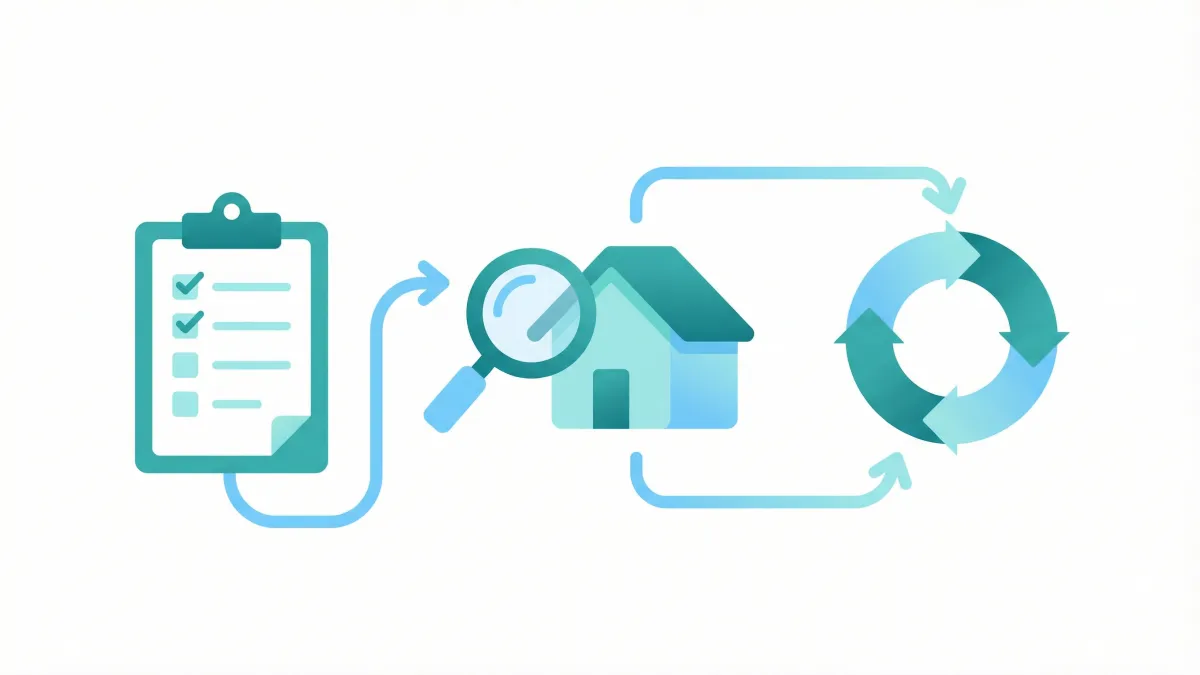
The work starts when you leave the property. After a routine inspection, property managers need to: categorise every finding into one of four buckets (urgent safety, landlord maintenance, tenant obligation, cosmetic note), send the owner a clear report by end of day, communicate in writing with the tenant about any items they need to address, log all open items with deadlines, and file the complete inspection record where it can be retrieved if a bond dispute arises months or years later.
The Work Starts When You Lock the Door
The on-site component of a routine inspection — walking the rooms, checking fittings, taking photos — is roughly 30 per cent of the job. The rest happens after you leave: categorising what you found, getting a report to the owner while the property is still fresh in everyone's mind, following up with the tenant in writing, logging maintenance requests against the correct responsible party, and building the paper trail that will matter if a bond dispute lands at tribunal eighteen months from now.
Most property managers run well-structured on-site inspections. The gap typically shows up in the follow-through — vague reports that don't tell owners what to do, tenant communications that are either missing or too confrontational, and open items that sit unresolved from one inspection to the next. Those gaps create risk for the agency: an unaddressed safety issue, a tenant breach that was never formally notified, a piece of damage that lacks a documented timeline.
This guide covers the follow-through: what to do with inspection findings in the hours and days after you close the door, and how to build a workflow that actually protects the owner, the tenant relationship, and the agency's own position.
Step One: Categorise Before You Communicate
Before you write a single word to the owner or tenant, sort your inspection findings into four distinct buckets. Mixing them — bundling a safety concern into the same paragraph as a note about garden tidiness — produces reports that owners cannot act on and tenants cannot meaningfully respond to.
Urgent safety defect — A finding that poses a risk to the health or safety of the tenant or others at the property. Examples include exposed electrical wiring, gas leak indicators, broken handrails, non-functional smoke alarms, and structural concerns. These require immediate escalation regardless of who is responsible for the underlying repair. Do not wait for the owner to approve the work before initiating contact with a tradesperson for urgent safety items.
Landlord maintenance item — A repair or maintenance task that falls to the rental provider under the tenancy agreement and applicable legislation. This includes deterioration of fixtures, appliance failures, plumbing issues not caused by tenant misuse, and building fabric defects. These require owner approval before works proceed in most cases, but your report should make the case clearly — with photos, a description of the risk of delay, and if possible a cost estimate.
Tenant obligation — Something the tenant needs to address under their lease or under the residential tenancies legislation. Cleaning standards, garden maintenance, removal of unauthorised items, or repair of damage caused by the tenant. These require a written communication to the tenant specifying what needs to be done and by when.
Cosmetic observation — A minor item that is noted for the record but does not currently require action. Examples include minor scuff marks on walls consistent with normal occupancy, a door that is slightly stiff, or minor garden growth consistent with seasonal conditions. These are documented in the report but do not generate a separate communication unless they escalate by the next inspection.
Getting this categorisation right before you start writing saves you from sending vague reports, confusing owners, or over-notifying tenants about items that don't need escalation.
Reporting to the Property Owner
Same-day is the professional standard for routine inspection reports to owners. An owner who receives their inspection report within a few hours of the visit feels the value of your service acutely. A report that arrives three days later signals disorganisation, and one that never arrives at all is how disputes about your management of their property begin.
Your owner report should be structured clearly. Lead with a brief overall summary — "the property is in good condition with one landlord maintenance item requiring attention" tells the owner the essential picture before they read anything else. Follow with the categorised findings, with photos attached to the specific items they support. Separate landlord items from tenant items explicitly, because the owner needs to know which ones require their decision and which ones you are handling with the tenant.
For any landlord maintenance item, include your recommendation — not just the observation. "Rangehood extraction fan is no longer functioning — recommend replacing before the next inspection, approximate cost $180–$240 for supply and fit" is far more useful than "rangehood needs attention." Owners who receive specific recommendations with cost context approve works faster than owners left to research and decide alone.
For any urgent safety defect, flag it first and separately from other items. Make clear what you have already done (initiated contact with a tradesperson, informed the tenant, whatever step you have already taken) and what decision or action you need from the owner. Do not leave an urgent safety finding buried at the bottom of a general findings list.
For any tenant obligation item, briefly note that you have communicated with the tenant (or are about to) and what timeframe you have given them to address it. Owners are reassured to know tenant obligations are being managed, not just observed.
Communicating With the Tenant After an Inspection
Tenant communication after a routine inspection should be written — email is standard — because you need a documented record of what you said and when. A verbal conversation at the inspection is a starting point; it is not a substitute for written follow-up.
If there is nothing to report, a brief note confirming the property was inspected and is in good condition is good relationship management and takes ninety seconds to send. Tenants who receive acknowledgement that they are looking after the property are more likely to renew and less likely to become adversarial later in the tenancy.
If there are tenant obligation items, your communication should be specific: what the issue is, where in the property it relates to, what the tenant needs to do, and by when. Vague requests — "please keep the property clean" — generate misunderstanding and are difficult to rely on if the issue persists. Specific requests — "the rangehood filter requires cleaning; please ensure this is done before the next inspection on [date]" — are clear, actionable, and documentable.
Keep your tone factual and non-accusatory. Property managers who communicate respectfully with tenants about inspection findings resolve issues faster and maintain better tenancy relationships than those who adopt a punitive tone. The goal is compliance, not conflict.
Send tenant communications from a channel that provides a record — email rather than SMS where possible, because email provides a clear record of what was sent and received. If your agency uses a property management platform, logging the communication against the tenancy record is good practice regardless of the channel used.
When a Finding Requires a Formal Breach Notice
A routine reminder to the tenant is different from a formal breach notice. Understanding when each is appropriate is one of the more important distinctions in post-inspection practice.
A written reminder — "we noticed the garden has become overgrown; please address this before the next inspection" — is not a breach notice. It is a notice. It is appropriate when a tenant obligation has been identified for the first time and you are giving the tenant a reasonable opportunity to address it.
A formal breach notice (called a Notice to Remedy Breach in some states, a Breach of Agreement notice in others) is a legal document that commences a formal process under the residential tenancies legislation. It is appropriate when: the tenant has previously been notified of the same issue and has not remedied it within a reasonable period, or when the nature of the breach is serious enough to warrant immediate formal escalation (significant property damage, health risks, or non-payment of rent).
Issuing a breach notice too early — for a first-occurrence, minor tenant obligation — can damage the tenancy relationship unnecessarily. Failing to issue one when the situation warrants it — a persistent issue that has been noted at multiple inspections without remedy — leaves the agency exposed if the matter later goes to tribunal. The sequence in most situations should be: identify the issue, send a written notice, give a reasonable timeframe, follow up at the next inspection, and escalate to a formal breach notice only if the issue remains unaddressed.
For the format, timeframes, and specific requirements for breach notices in each Australian state and territory, see our breach notice guide. Notice content and response periods differ between NSW, Victoria, Queensland, and the other states.
Urgent Safety Defects: Different Rules Apply
Every Australian state and territory distinguishes urgent or emergency repairs from routine maintenance, and the distinction matters for what you are required to do and how quickly.
An urgent safety defect found at a routine inspection — a gas appliance emitting fumes, exposed electrical wiring, a broken smoke alarm that cannot be reset, a structural hazard — cannot go into a follow-up queue. The obligation to act begins the moment you become aware of it.
In NSW, urgent repairs that affect the health or safety of occupants must be addressed within 24 hours for life-safety issues and within 72 hours for habitability issues. In Victoria, Consumer Affairs Victoria's guidance treats urgent repairs as requiring action "immediately" — meaning as soon as the issue is identified, not at the next business day. In Western Australia, property managers must contact a suitably qualified repairer within 48 hours of becoming aware that an urgent repair is required.
For property managers, the practical implication is: if you find an urgent safety issue during a routine inspection, you contact a tradesperson on the way back to the office, not after you have written up the full report. You inform the owner as part of the same communication you send about the rest of the inspection, but you do not wait for owner approval before initiating contact with a repairer for urgent safety items — all Australian residential tenancy legislation provides for emergency repairs to be authorised and carried out without prior owner consent in genuine urgent situations.
Document the finding, the time you identified it, and the steps you took. That documentation is what demonstrates appropriate professional conduct if the repair or its delay is later questioned.
Landlord Maintenance Items: How to Frame and Document
When a finding is the owner's responsibility to address, the quality of your maintenance request directly affects how quickly it gets resolved. Property managers who present owners with clear, specific, photo-supported requests with recommended actions get faster approvals than those who send vague observations and wait for the owner to ask follow-up questions.
A well-structured landlord maintenance request should include: a clear description of what the issue is (not what it looks like or who might be at fault — just what the problem is), a photograph that shows the issue in context, an explanation of the risk or consequence of leaving it unaddressed (tenant discomfort, further deterioration, potential legislation breach, liability concern), a recommended course of action (specific tradesperson category, what the repair involves), and where possible, a cost range or quote.
For significant items — a failing hot water system, deteriorating fencing, significant appliance failure — obtain a quote before sending the request to the owner. An owner who sees a clear photo, understands the consequence of delay, and has a specific dollar figure in front of them will make a decision in a single email exchange. An owner who receives a vague description and is asked to "let us know how you want to proceed" will ask clarifying questions, delay, or defer, and the issue will sit open until the next inspection.
Log every landlord maintenance request against the property record with a date opened and a status. Track whether the owner has approved, whether works have been scheduled, and whether the work has been completed. At the next routine inspection, check these open items and report on their status.
Building a Follow-Up System That Produces Results
Open items from routine inspections are where property management risk accumulates. A finding that is noted in a report but never resolved — because the follow-up system relies on memory rather than structure — is not just an administrative failure. It is a potential negligence claim if the unresolved item later causes harm, a weakened position at tribunal if the issue is disputed at bond time, and a signal to owners that their property is not being actively managed.
A functional follow-up system has three components. First, every action item must have an assigned owner — the property manager, the landlord, or the tenant — so it is clear whose responsibility it is to progress. Second, every action item must have a deadline — a specific date by which the issue should be resolved or its status confirmed. Third, every action item must be closed with a record of what was done, by whom, and on what date.
Most modern property management platforms (PropertyMe, PropertyTree, Console Cloud) include maintenance and communication log features that can support this. Dedicated inspection software platforms generate open items automatically from inspection findings and track their status. Whichever system you use, the principle is the same: nothing from a routine inspection should be left in a state where it could be forgotten.
At every subsequent routine inspection, begin by reviewing the open items from the previous inspection. Items that were supposed to be resolved and were not need to be escalated — either because the owner has not approved works that were recommended, or because the tenant has not addressed an obligation item. This review step is where many agencies lose discipline: a new inspection replaces the last one without anyone checking what was outstanding.
Connecting Routine Inspection Records to Bond Claims
Routine inspection reports are not just operational documents — they are evidence. When an exit condition report reveals damage and a tenant disputes the bond claim, the most powerful supporting evidence a property manager can produce is a series of routine inspection records that document the timeline of when the damage first appeared, when the tenant was notified, and what they were required to do about it.
A tribunal member assessing a disputed bond claim for tenant damage will ask two questions: does the damage exceed fair wear and tear, and did the tenant cause it? Condition reports — entry and exit — answer the first question. Routine inspection records answer the second, by establishing that the damage was not present at entry (shown in the entry condition report), was identified during a routine inspection (timestamped photo and note), and was communicated to the tenant as a matter they were responsible for addressing (written notice on file).
Without that chain of documentation, a property manager trying to defend a bond claim for damage that appeared mid-tenancy is relying entirely on the exit condition report — which only shows current state, not when the damage occurred or how it was handled. A series of routine inspection records fills in the timeline in a way that is difficult for a tenant to credibly dispute.
This is why the habit of filing inspection records completely — with timestamped photos, specific written findings, and documented tenant communications — is not just good administration. It is the investment that pays out when a significant bond dispute arrives. For more on building a defensible evidence trail, see our guide on how to photograph rental damage as bond evidence and our winning bond disputes guide.
Re-Inspections: When They Are Required and How to Run Them
Not every inspection closes cleanly. Some findings require a re-inspection to confirm that an issue has been resolved — particularly where a tenant obligation notice has been issued or where landlord works have been completed and need to be verified as adequate.
Re-inspections are routine inspections for the purpose of the notice rules in every Australian state. You cannot re-enter the property without giving the appropriate notice period (generally seven days in most states — see the routine inspection notice guide for state-specific requirements). There is no exception for a "quick follow-up check" without notice.
When scheduling a re-inspection, be specific about its purpose in the entry notice. If you are re-inspecting to confirm that a garden maintenance obligation has been met, say so. If you are re-inspecting to verify that maintenance works have been completed to the required standard, say so. This ensures the tenant knows what the visit is for, and creates a clear record that the re-inspection was purposeful, not speculative.
Document the re-inspection outcome. If the issue has been resolved, close the action item with a note confirming resolution. If it has not been resolved, you now have a documented second finding of the same issue — which is generally the threshold at which a formal breach notice becomes appropriate. That progression — initial finding, written notice, re-inspection, formal breach if unresolved — is the workflow that holds up at tribunal if the matter is eventually disputed.
The One-Week Post-Inspection Review
Build a one-week review step into your post-inspection workflow. Seven days after closing an inspection, take five minutes to confirm: the owner report was sent and acknowledged, tenant communications were sent, all open items are logged with deadlines, any urgent items have been actioned, and any breach notices that needed to be issued were sent.
For most inspections, this review will find nothing outstanding and close in under a minute. For the handful of inspections each month where something slipped — a maintenance request that was not logged, a tenant notice that was drafted but not sent — the one-week review catches it before it becomes a problem.
This step also gives you a natural point to follow up with the owner if a significant recommendation has not been responded to. One week after issuing an inspection report that includes a maintenance recommendation is an appropriate interval to ask whether the owner would like you to proceed. It avoids the common failure mode of issuing a recommendation, receiving no response, and leaving the item in limbo for the next three months until the next inspection.
Frequently Asked Questions
Try ConditionHQ Free
Create 1 free condition report per month at no cost. All 8 Australian states supported.
Related Articles
Property Condition Report Templates Australia: State-by-State Guide (2026)
10 min read read
Short-Term Rental Condition Reports in Australia: What Property Managers Actually Need
10 min read read
When Does a Lease Renewal Require a New Condition Report? A State-by-State Guide
9 min read read